IoT Development Board with Graphical Programming Suite featuring a 1.14-inch Colour TFT LCD Screen, Type-C Power Input, GROVE Connectivity, Onboard RTC, PMU, and Microphone for Educational Electronics Projects


IoT Development Board with Graphical Programming Suite featuring a 1.14-inch Colour TFT LCD Screen, Type-C Power Input, GROVE Connectivity, Onboard RTC, PMU, and Microphone for Educational Electronics Projects
Official IoT Development Board with Graphical Programming Suite and 1.14-Inch Colour Screen
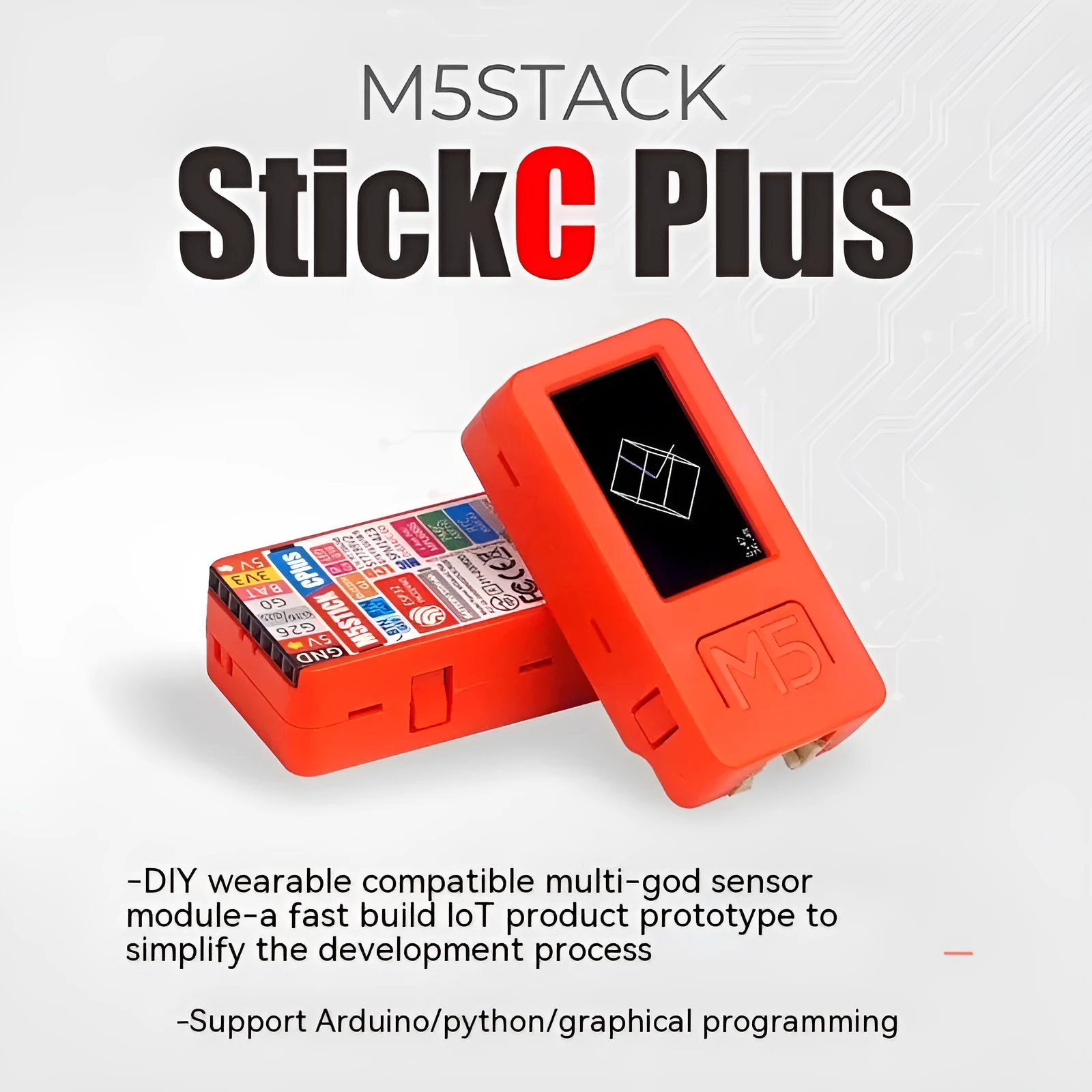
This official IoT development board provides an accessible entry point into electronics and the Internet of Things, designed specifically for educational use. Its core advantage is the bundled graphical programming suite, which allows users to create functional code using drag-and-drop blocks instead of traditional text-based syntax. This approach significantly lowers the learning curve, making it suitable for students, hobbyists, and educators beginning their journey in embedded systems. The board itself is a fully-featured platform, integrating a clear colour display, multiple input/output options, and essential support circuitry, ready to bring visual and interactive projects to life straight from the box.
Features and Construction
The board is built as a cohesive unit, combining a programmable microcontroller platform with a suite of onboard peripherals and a robust power system. Its design focuses on practicality for learning environments, where reliability and clear feedback are essential. The inclusion of standard interfaces like Type-C and the GROVE ecosystem ensures compatibility with a wide range of accessories and simplifies physical connections.
Material and Build
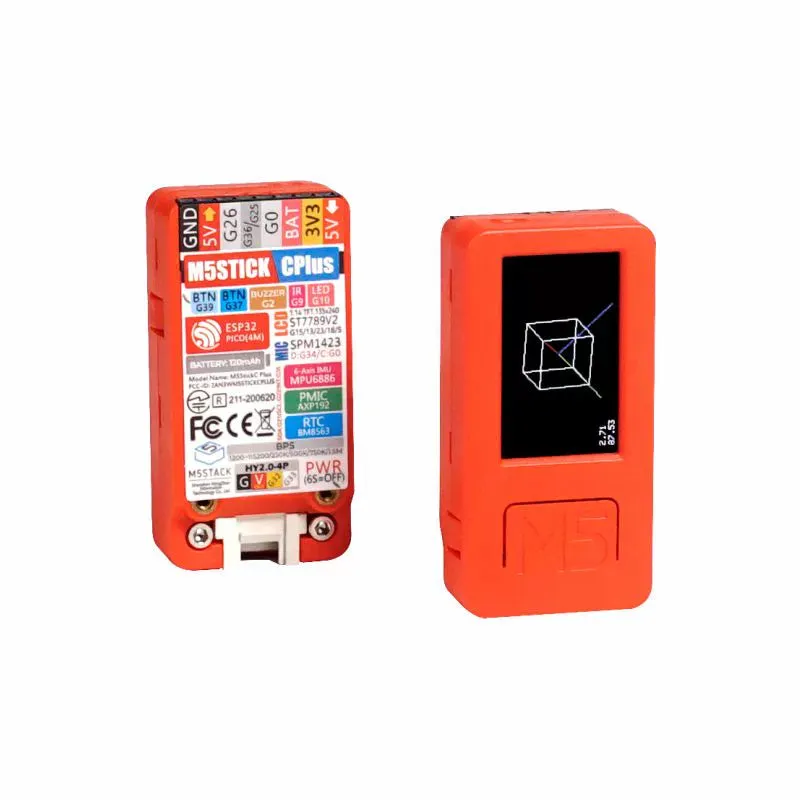
The development board is housed in a case made from PC (Polycarbonate), a material chosen for its impact resistance and ability to protect the sensitive electronic components within. This sturdy enclosure provides a stable base for the integrated 1.14-inch TFT LCD screen, buttons, and ports. The internal layout supports the AXP192 Power Management Unit (PMU), which efficiently regulates the 5V input from the Type-C port to the various components, including the ST7789v2-driven display, the BM8563 Real-Time Clock (RTC), and the SPM1423 microphone, ensuring stable operation during project development and testing.
Size and Practical Fit
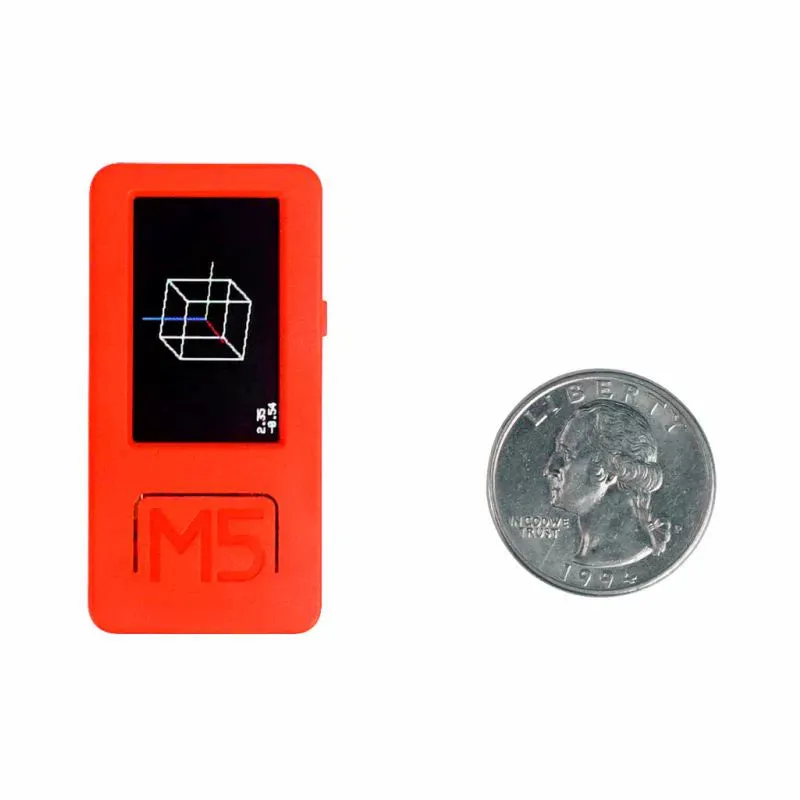
The central visual component is the 1.14-inch colour TFT LCD screen with a resolution of 135 by 240 pixels. This screen size offers sufficient space to display sensor data, simple graphics, or user interface elements without dominating the board's footprint. The board's overall dimensions are designed to be handheld or placed on a desk conveniently. The two customisable buttons and the single red status LED are positioned for easy access, allowing for interactive projects that provide immediate physical and visual feedback, which is crucial for understanding programming cause and effect.
Uses and Placement
This board is engineered for applied learning in electronics and software. It bridges the gap between abstract coding concepts and tangible outcomes, making it ideal for structured educational settings and independent exploration. Its capabilities allow for the creation of projects that respond to environmental input, manage data, and control external devices.
Event or Professional Use
In workshop or classroom settings, the graphical programming suite enables an instructor to demonstrate core programming logic—like loops, conditionals, and variable use—without the distraction of syntax errors. Students can then immediately apply these concepts to make the onboard LED blink, read button presses, or display text on the screen. The integrated GROVE port, supporting I2C, digital I/O, and UART, allows the curriculum to expand seamlessly to include external temperature sensors, light detectors, or motor drivers, illustrating complete system design. The onboard RTC also permits projects involving data logging with timestamps.
Everyday Home Use
For the hobbyist at home, this board serves as a versatile prototyping tool for smart device concepts. The microphone enables sound-reactive projects, such as a clap-activated light or a noise level monitor. The colour screen can be programmed as a mini dashboard for displaying weather information fetched online, a digital clock using the RTC, or a scorekeeper for games. The low barrier to entry with graphical programming means ideas can be prototyped rapidly, moving from concept to a working model without deep prior coding knowledge, making it perfect for DIY smart home gadgets or interactive art installations.
Benefits and Buying Value

The value of this development kit lies in its integrated, beginner-focused approach. It consolidates several commonly needed components into a single, ready-to-use package, eliminating the initial hassle and extra cost of sourcing and wiring individual parts like screens, RTCs, or microphone modules. This consolidation allows learners to concentrate on programming logic and project design from the very first session.
Reuse and Low Maintenance
The board is designed for repeated use across multiple projects. The graphical programming software can be erased and rewritten countless times, allowing the same hardware to function as a digital thermometer one day and an interactive timer the next. The sturdy PC case helps protect the electronics from accidental bumps or spills common in learning environments. With no moving parts and power delivered through a robust, reversible Type-C connector, the board requires minimal maintenance, simply needing a standard USB power source and a computer to program it for its next application.
Why Choose This Product
This IoT development board is chosen for its specific focus on visual, hands-on learning. Unlike bare microcontroller boards, it includes a dedicated display and input peripherals. Unlike more advanced kits requiring text-based coding, its graphical suite ensures immediate engagement and success. The inclusion of professional-grade support components like a dedicated PMU and RTC also means the skills learned are transferable to more advanced platforms. It provides a complete, self-contained introduction to creating interactive electronic devices, making it a practical and efficient starting point for building a foundation in IoT development.